
Over the past 3 years, ChatGPT has transformed from a novelty chatbot into a central pillar of online discovery and content interaction. The scale of adoption is staggering.
Quick Stats:
- As of 2025, ChatGPT reportedly has 800 million weekly active users, having doubled from 400 million earlier the same year.
- Users are sending billions of prompts daily, signaling deep integration into both personal and professional workflows.
Source: Demand Sage
As AI becomes a primary gateway to information, 2026 marks a pivotal shift: ChatGPT’s algorithm is no longer just fetching answers. It is evolving into a full-fledged discovery engine that tests content for authority, freshness, and even sentiment.
This changes everything for brands, marketers, content creators, and businesses.
Let’s discuss the 8 major ChatGPT algorithm updates shaping the search in 2026, explore what they mean for your brand’s visibility and how you can adapt using Answer Engine Optimization(AEO) strategies.
TL;DR – Key Takeaways
- ChatGPT is no longer just a chatbot. It’s evolving into a predictive discovery engine that recommends brands before users even search.
- Authority beats volume. Self-citations and spammy mentions are losing value. GenAI engines now prioritizes expert-driven, industry-verified sources.
- Anonymous, low-quality community content is being replaced by credible publications and named experts.
- Video is now a core ranking input. LLMs will increasingly surface YouTube, short-form video, and transcribed visual content alongside text.
- Topical consistency drives recommendations. Brands that consistently publish around a single niche get stronger category associations.
- Freshness and citation velocity matter more than legacy. Recent mentions, updates, and PR momentum will outrank older, stagnant brands.
- Sentiment influences visibility. Positive reviews and brand reputation across platforms like G2, Trustpilot, and social media has more impact on recommendations.
- Blogging still matters as a data source. Content should be written for Humans (easy to understand and complete) and structured for AI (Structured, updated, schema-enabled).
ChatGPT Algorithm Updates 2026: What Your Brand Must Do
ChatGPT is undergoing a structural shift in how it evaluates and surfaces information. By closely tracking changes across AI search behavior, citation patterns, and content sourcing over time, clear signals are emerging about what the platform is beginning to prioritize.
These Algorithm Updates are not surface-level refinements; they represent a deeper recalibration of authority, relevance, and trust within AI-driven discovery. Each of these updates reflects a meaningful change in how brands are assessed and positioned inside ChatGPT.
Below are the key ChatGPT algorithm updates that every brand must adapt to in order to remain visible and trusted inside ChatGPT.
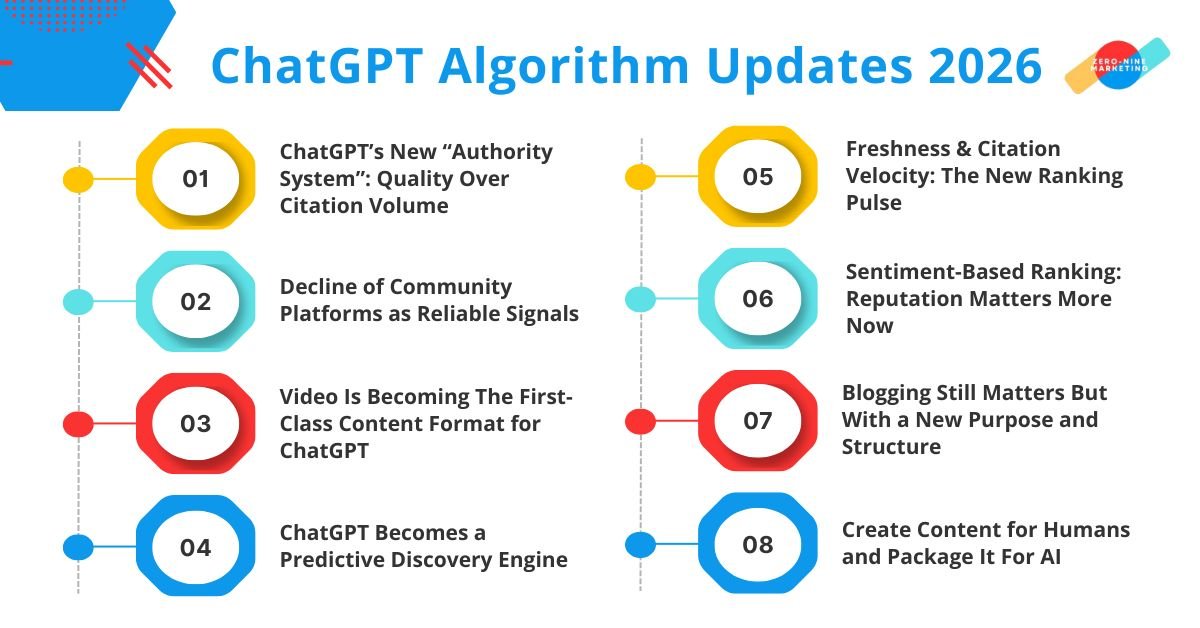
ChatGPT’s New “Authority System”: Quality Over Citation Volume
Historically, it’s been possible to publish self-referencing listicles and receive considerable search visibility, even without recognized authority. But in 2026, ChatGPT is shifting away from raw citation volume.
Instead, it’s building a domain-level authority system similar to Google’s E-E-A-T. The implications are that self-citations and manufactured link spam will lose weight and possibly be filtered out altogether.
What Signals Matter Now:
- Mentions from credible, industry-specific publications
- Content authored by recognized experts, with explicit attribution
- Demonstrated subject-matter depth and specialization, not just superficial overviews
This mirrors what many in SEO and AI circles forecast under the umbrella of “Generative Engine Optimization” (GEO).
As LLM platforms like ChatGPT, Perplexity, and Gemini mature, they are prioritizing authority and trustworthiness over sheer content volume. The global GEO market is rapidly growing as organizations are heavily investing in AI-driven content visibility strategies.
How Your Brand Should Respond:
- Focus on genuine expertise: Publish in-depth content based on domain knowledge, research, or expert-led studies.
- Earn third-party mentions: Get featured or cited on respected industry websites, expert roundups, and niche publications.
- Avoid self-citation tricks: Relying only on internal cross-linking won’t cut it anymore.
- Position your brand as a thought-leader: Use case studies, data-driven articles, and expert commentary to build niche authority.
As a full-stack marketing agency, we have helped multiple clients transition from generic blog content to expert-led publications.
Results:
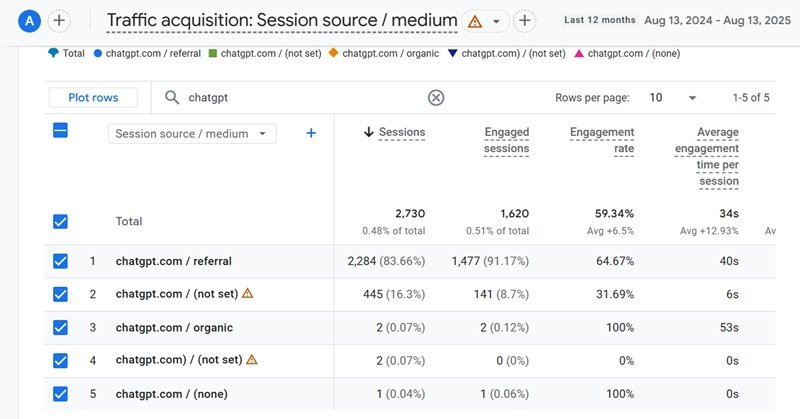
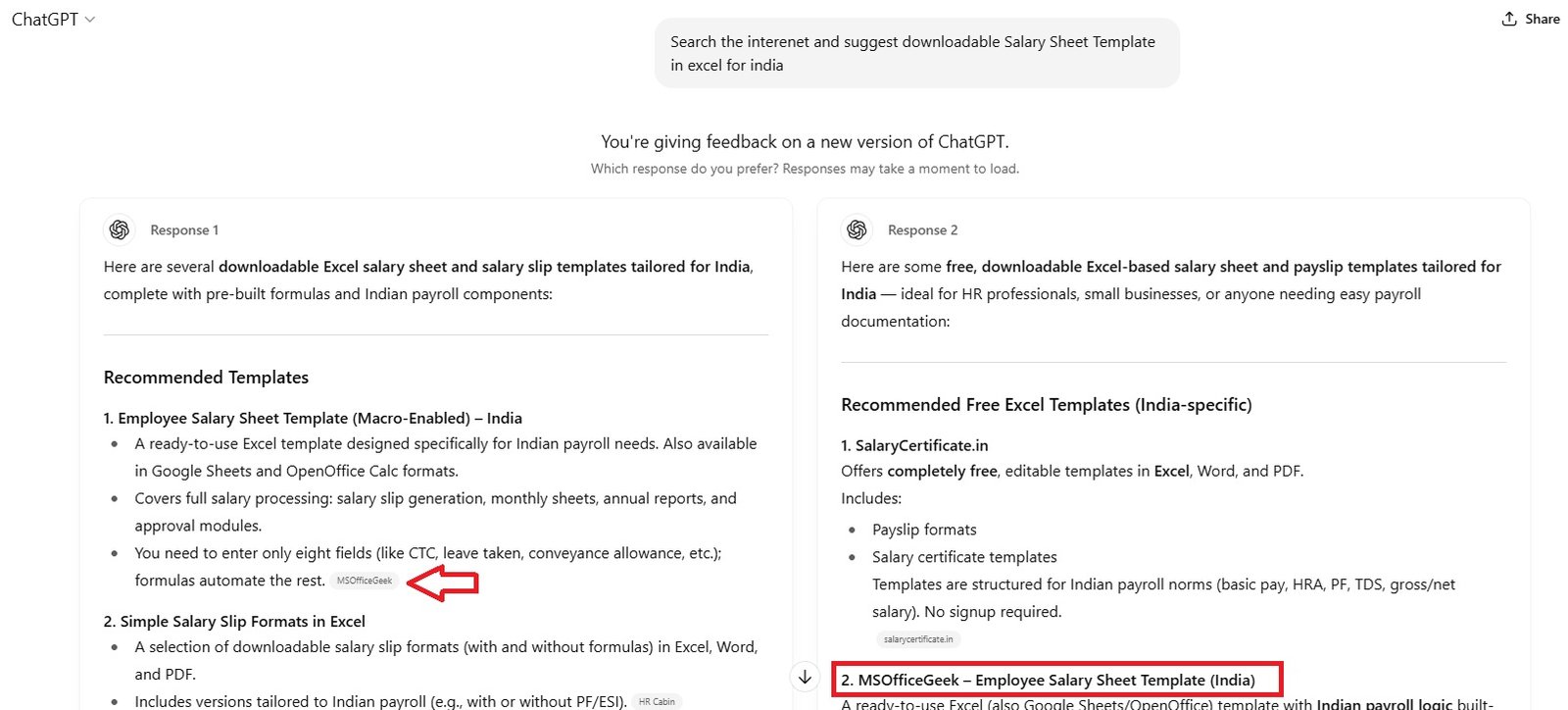
Their brand mentions on ChatGPT and other LLMs increased by over 150 % within six months, and AI-driven discoverability improved significantly.
Decline of Community Platforms as Reliable Signals
Platforms like Reddit and Quora have long been a source of quick user opinions, tips and community-generated content. But their quality is inconsistent, and anonymity makes credibility murky. As ChatGPT’s algorithm becomes more discerning, these open forums are being devalued.
What the Algorithm Now Prefers:
- Specialized, expert-driven platforms instead of anonymous forums
- Verified authorship and expert contributions rather than crowd-sourced advice
- Authenticated insights with reputational backing (e.g., bylines, credentials, citations)
How to Adapt:
- Don’t rely on Reddit threads or generic forums for brand mentions.
- Invest in thought leadership content on expert blogs, niche media, or industry publications.
- Ensure content is attributed properly (author names, credentials, date, citations).
For brands whose entire visibility depended on open forums, this shift is a wake-up call. Instead of gaming quantity, prioritizing quality, context, and authority is the way forward.
Video Is Becoming The First-Class Content Format for ChatGPT
The world is already experiencing what many marketers predicted: video dominance. By 2025, online video content is projected to make up 82% of internet traffic, and users spend, on average, around 100 minutes per day watching online videos.
Given that human consumption trends are shifting toward video, ChatGPT aims to mirror user behavior. This is the reason that video content will become part of ChatGPT’s response mix.
What ChatGPT Reads in Videos:
- Titles and descriptions
- Captions / transcripts / on-screen text
- Metadata (upload date, tags, keywords)
- Engagement signals such as views, comments, shares
How Brands Can Grasp This Content Format Shift:
- Produce high-quality video content around your core topics, not just written blog posts.
- Ensure machine readability: add transcripts or captions, use natural language in titles/descriptions, embed keywords organically.
- Optimize for SEO and AI: clear metadata, structured descriptions, and relevant tags.
- Maintain consistency — video output frequency may influence content velocity and freshness
Quick Stats:
According to content marketing data, pages with video content see higher conversion rates (e.g., 4.8% vs. 2.9% for non-video pages) and better engagement metrics like dwell time. (Search Atlas)
At ZeroToNine Marketing, we have begun incorporating video into long-form content strategies, and in several campaigns. The traffic and engagement increased by 20–30% after adding video content with proper metadata and transcription.
ChatGPT Becomes a Predictive Discovery Engine
Until now, ChatGPT responded to the prompts users explicitly typed. In 2026, there is a shift. ChatGPT will start predicting user needs, anticipating questions before they’re asked, based on your behavior, preferences, search history, and patterns.
For Example:
If a user has recently searched about “healthy nutrition,” “workout routines,” and “weight-loss diets,” ChatGPT might proactively suggest new content or resources on “beginner-friendly muscle-gain meal plans.”
Why This Matters for Brands:
- Brands no longer compete solely on keywords, they compete on “topic association.”
- Consistency of topical output becomes crucial: the more you publish around a theme, the more ChatGPT may implicitly associate your brand with that topic.
- First-party data (e.g., from ad campaigns) and user-behavior signals will influence AI-driven recommendations, especially if you run ads inside ChatGPT or related ecosystems.
How to Position Your Brand:
- Define a clear niche or vertical and own it by producing consistent, high-quality content around it.
- Use customer data and insights to understand user behavior and tailor content, especially if leveraging AI ad platforms.
- Build an association-based content strategy: create content not just for individual search queries but for broader themes that align with your brand’s identity.
This shift from reactive to predictive discovery means the brands that “own a niche” early will have a first-mover advantage, becoming the default recommendation whenever a user explores that topic.
Freshness & Citation Velocity: The New Ranking Pulse
Legacy brands with large existing citation volumes once dominated search visibility. However, in 2026, ChatGPT’s algorithm is being tuned to favor recentness and momentum:
- How frequently a brand has been mentioned in the past 30–60 days
- The pace of new citations, appearances, and content updates (citation velocity)
- The recency of content — ChatGPT may prioritize “recently updated” over “historically authoritative.”
Why This Matters:
- Brands that once enjoyed long-term dominance may see reduced visibility if they become stagnant.
- Newer, agile brands producing consistent, up-to-date content can rise quickly — even without decades-old legacy citations.
How to Win with Freshness:
- Publish regularly and maintain a cadence of new content (blog posts, press mentions, guest articles, video content).
- Use digital PR, it means use press coverage, podcasts, collaborations, expert roundups to accelerate citation velocity.
- Update existing content refresh old posts, add a “Last Updated” date, include new data or perspectives.
- Treat content as a living asset, not a static library.
Our team specializes in building citation momentum for brands through PR campaigns, guest posting, and content refresh strategies, helping your brand gain AI-driven visibility quickly and sustainably.
Sentiment-Based Ranking: Reputation Matters More Now
Unlike static citation-based ranking, 2026’s ChatGPT algorithm now factors in sentiment — determining whether mentions are positive, negative, or neutral.
That means brands don’t just need citations, they need good reputation signals across reviews, user feedback, social chatter, and community sentiment.
What Data Points Will Influence Sentiment Ranking:
- Reviews on platforms like G2, Trustpilot, Yelp, Amazon
- Social media feedback, comments, user discussions
- Forum threads, testimonials, and other forms of user-generated content
- Brand sentiment over time, not just isolated reviews
Why This Shift Matters:
- A single negative review or public reputation misstep can impact AI-driven recommendation probability.
- Brands with lots of neutral or negative mentions may be filtered out even if they have high citation volume.
- Reputation management is no longer optional; it’s a core part of AI visibility strategy.
How Your Brand Should Respond:
- Encourage satisfied customers to leave positive, public reviews.
- Proactively respond to negative feedback and resolve issues publicly.
- Use sentiment-monitoring tools to track brand reputation over time.
- Build a habit of verifying, sharing, and promoting positive customer experiences.
Quick Stats:
Given that 90% of consumers trust online reviews as much as personal recommendations. (Center.ai)
Sentiment is rapidly becoming a dominant trust signal and ChatGPT is likely to reflect that in its recommendations.
Also Read: How to Rank in Google AI Overviews
Blogging Still Matters But With a New Purpose and Structure
Even as consumption shifts to video and AI-driven discovery, blogs remain critical data sources for AI to parse, cite, and reference. Generative engines need structured, text-based content to analyze — and blogs fit that bill.
What Blog Content Needs in 2026:
- Clear, well-structured format (using H2/H3 headings, bullet points, tables).
- Schema markup (FAQ, How-To, Article), to help AI parse context and structure.
- Up-to-date information, regularly refreshed and optimized for relevance.
- Readability and scannability for both humans and AI.
How to Optimize Your Blog Strategy:
- Add a summary or “key takeaways” at the top of every post — helps both humans and AI quickly understand context.
- Use tables, comparison charts, or structured data to present clean, scannable info.
- Regularly update older content — whether data, dates, or new insights — and add “Last Updated” tags where possible.
- Treat your blog as a living knowledge base, not a static marketing funnel.
For many brands, this shift calls for rethinking the purpose of blogs, from traffic-first pages to AI-ready knowledge assets.
We have helped clients transition their legacy blogs into structured knowledge bases: adding schema markup, restructuring content, and refreshing old posts.
Result: Improved AI citations, better user engagement, and a stronger content ROI
Create Content for Humans and Package It For AI
In 2026, content has two core audiences:
- Humans: Who value depth, storytelling, insight, clarity.
- AI Engines: Which need structure, clarity, machine-readability to parse, cite, and recommend.
Ignoring either audience risks exclusion: either you lose human readability or AI visibility.
How to Package Content for Both Audiences:
- Use user centric questions/queries in your headings.
- Provide statistics and reference from high-value industry sites.
- Make the content skimmable, because that helps both humans and LLM engines to recognize clarity.
- Use clear headings and sub-headings (H2, H3, H4) to segment topics logically.
- Include concise summaries or key takeaways at the start of each major section.
- Use bullet lists, tables, and structured layouts, these are easily parsed by AI and also improve readability.
- Implement schema markup (Article, FAQ, How-To) wherever possible.
- Use natural language, not keyword stuffing: AI algorithms now value depth and relevance over density of keywords.
If LLM engines like ChatGPT, Perplexity, Gemini, Copilot, and Grok cannot parse your content properly, it won’t cite you. If humans find it cluttered or hard to read, they won’t engage.
The brands that win in 2026 are those who master the art of dual-layer content optimization.
Conclusion
The future of discovery and visibility is changing and 2026 is the turning point. ChatGPT is becoming a predictive discovery engine, powered by signals like authority, freshness, sentiment, and structured data.
If your brand doesn’t adapt, it risks being invisible regardless of how much content you already have. But for those who evolve, this is a massive opportunity.
At ZeroToNine Marketing, we specialize in helping brands navigate this new AI-driven landscape. From building genuine authority to optimizing content for AI.
Ready to increase your brand’s AI-visibility in 2026?
Schedule a Free Consult for LLM Optimization and build your visibility, trust, and discovery pipeline in ChatGPT and other answer engines.
Frequently Asked Questions
Can small or new brands compete with established companies in ChatGPT results in 2026?
Yes. ChatGPT’s shift toward freshness, citation velocity, and topical authority means newer brands can outperform legacy players if they publish consistently, earn recent mentions, and build expert credibility faster within a focused niche.
Does paid advertising inside ChatGPT influence organic recommendations or citations?
Paid placements can help train relevance signals using first-party data, but organic citations still depend on authority, sentiment, freshness, and credibility. Ads may improve visibility, but they don’t replace the need for strong organic AI signals.
How long does it take for ChatGPT to recognize and start citing a brand?
Usually, between 2 weeks to 8 weeks. There is no fixed timeline. However, brands that publish consistently, earn third-party mentions, and maintain positive sentiment often begin seeing AI citations within a few months, especially when citation velocity increases.
Will optimizing for ChatGPT negatively impact traditional Google SEO?
No. In fact, most ChatGPT optimization practices like authority building, content freshness, structured data, and expert-led content will also strengthen traditional SEO. If you have been doing SEO right then AI discovery automatically improves.